
Skip to product information
1 of 1

SKU:

Cellular and foam rubber - All types & sizes

Cellular and foam rubber - All types & sizes

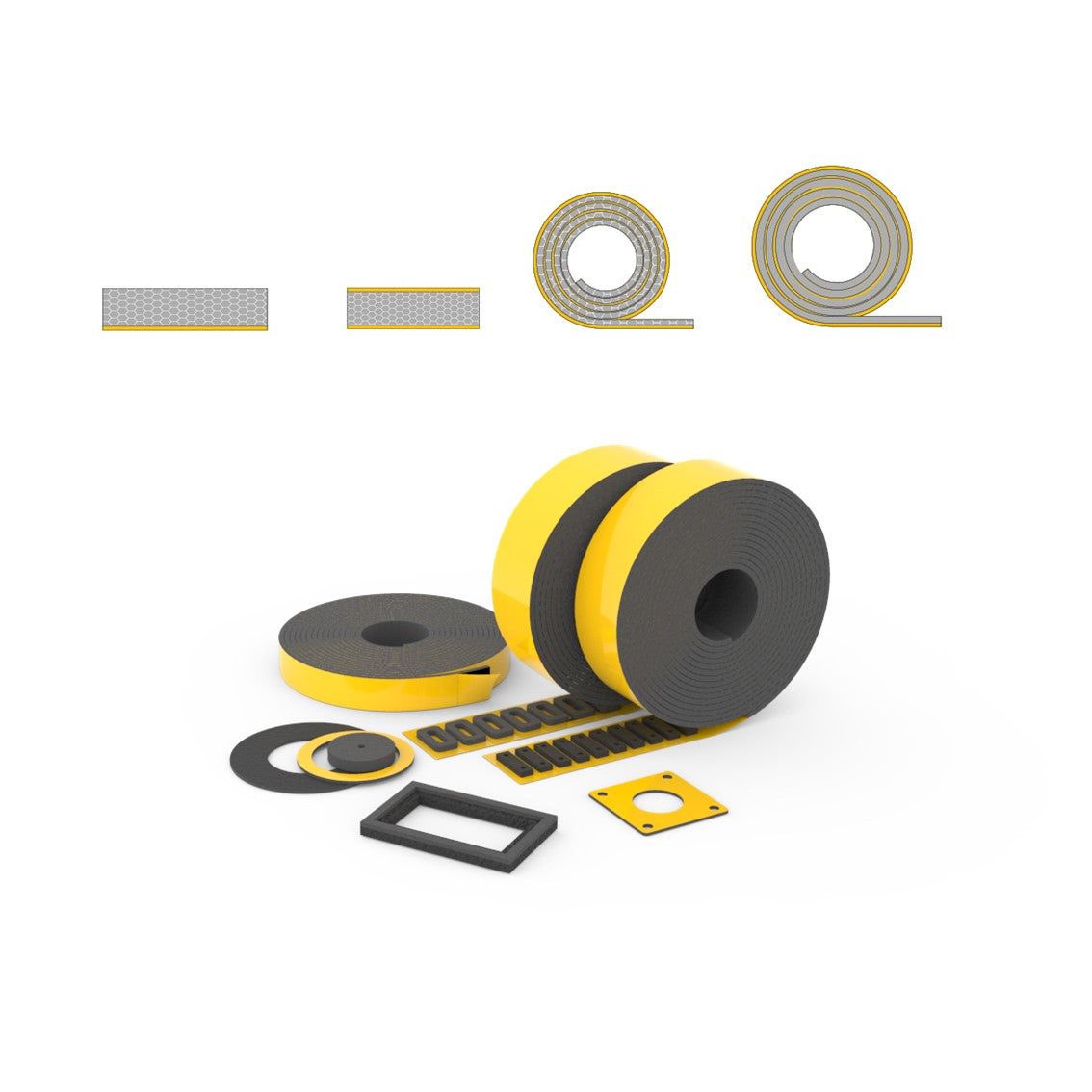
Our manufacturing capability produces Cellular and foam rubber in a comprehensive range of densities, cell structures (open and closed), hardnesses and chemistries (EPDM, neoprene, NBR, silicone, PVC foam). Materials can be precision die-cut, waterjet or CNC cut to custom shapes, sizes and thicknesses to meet sealing, cushioning, thermal insulation and vibration-damping requirements.

Typical applications include gaskets, seals, pads, edge trims and acoustic insulation where compressibility and sealing performance are required. For product selection and specification assistance, consult our Cellular and foam rubber collection or contact our technical team for material recommendations, density selection and fabrication options.

View full details

Contact us

We can manufacture many more custom products than those displayed on our website.

Contact us to discover all the possibilities if you didn't find what you are looking for.

Cellular and foam rubber – materials and applications

Cellular and foam rubber encompasses a range of open‑ and closed‑cell elastomeric and plastic foams used for sealing, cushioning, thermal or acoustic insulation, vibration damping and buoyancy. These materials are selected for compressibility, recovery, density and resistance to water, oil and weathering depending on the application. For specification and selection, refer to the cellular and foam rubber collection for an overview of available material families and typical use cases: cellular and foam rubber collection.

Cutting, sizing and technical guidance for procurement

Manufacturing methods typically include die‑cutting, CNC routing and compression cutting to produce sheets, strips, profiles and bespoke shapes. Products can be supplied in a broad range of sizes and thicknesses to suit gasket assemblies, panel inserts or protective pads; achievable dimensions and tolerances can vary with material type and cutting method. Technical information such as material data sheets, density or compression set values may be available on request to support specification and procurement decisions. RuplaTec supplies cellular and foam rubber products for industrial and marine customers; contact our team for material advice, sample requests or to discuss cut-to-size requirements relevant to your project.

FAQ

What are the common industrial applications for cellular and foam rubber?

Cellular and foam rubber are used for sealing, gasketing, cushioning, vibration damping, thermal insulation and protective packaging in industrial contexts. Their compressible structure and variable density make them suitable where conformity to uneven surfaces or energy absorption is required. Selection depends on operating conditions and the interface with adjoining materials. For technical guidance on specific applications and material suitability, contact our team for advice.

How do I select the right cellular and foam rubber material for my project?

Selection is based on functional requirements such as compressibility, resilience, cell structure (open or closed), chemical resistance and operating temperature range. Consider expected mechanical loads, exposure to oils or solvents, and whether the application requires flame, weather or UV resistance. Our product range includes multiple formulations and thicknesses; contact our team with application details so we can advise on the most appropriate cellular and foam rubber options.

Can cellular and foam rubber be cut to custom sizes and thicknesses?

Yes. Our manufacturing capability includes cutting cellular and foam rubber to custom sizes and thicknesses to meet specific project requirements. We can produce simple rectangular blanks, profiled sections and more complex shapes using appropriate cutting methods. When specifying custom parts, provide details on required tolerances, edge finish and shape. For recommendations on cutting methods, material behaviour and practical limits, contact our team for technical advice.

What are the recommended storage and handling practices for cellular and foam rubber?

Store cellular and foam rubber in a clean, dry environment away from direct sunlight, strong ozone sources and excessive heat to minimise premature ageing and deformation. Avoid prolonged compression during storage to reduce risk of permanent set. Keep materials away from solvents and strong chemicals that can degrade polymers. Handle sheets and cut parts with care to prevent tears or distortion. For storage duration, material-specific incompatibilities or handling instructions, consult our team for tailored guidance.