
Skip to product information
1 of 1

Rubber wall protection

Rubber wall protection

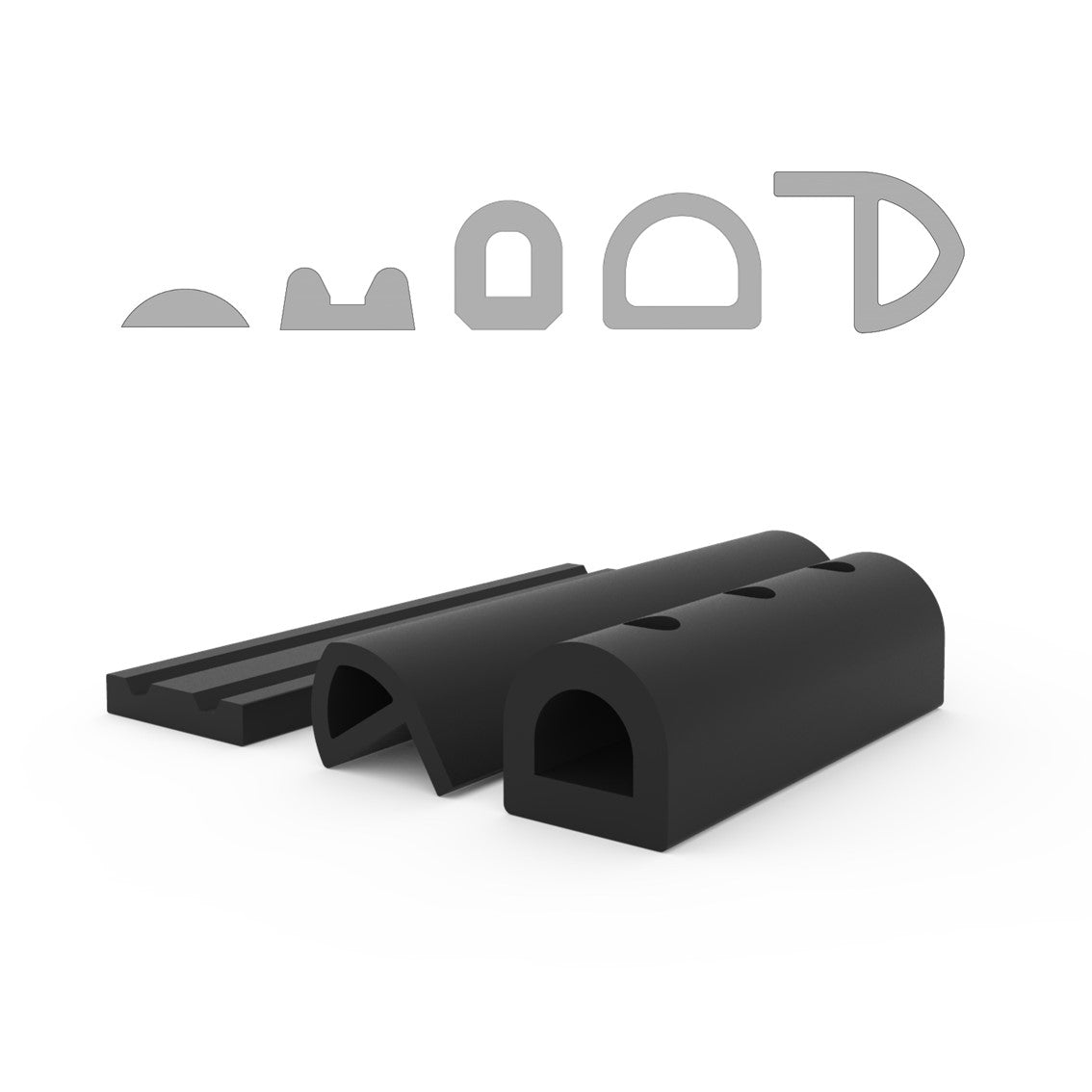
These rubber wall guards are moulded from 100% recycled rubber and measure 40(H) x 1000(W) x 160(D)mm. Manufactured for Vigil Products, the units function as continuous Wall protection profiles or discrete bumpers, providing impact resistance and surface protection in industrial environments. The resilient compound offers abrasion resistance and dimensional stability; profiles can be cut to length for site fitting.

Typical applications include corridor walls, loading bays, racking and plant enclosures where robust barrier protection is required. For specification advice or to confirm compatibility with fixings and substrates, contact our team. See the full range in the rubber wall protection collection: /collections/rubber-wall-protection

We can supply Rubber wall protection in virtually any design and specification.

Custom production is possible based on technical drawings, material requirements, or performance criteria.

Most standard sizes are available from stock.

Contact us to discuss your requirements, and our technical specialists will guide you through the entire development and production process.
View full details

Contact us

We can manufacture many more custom products than those displayed on our website.

Contact us to discover all the possibilities if you didn't find what you are looking for.

Wall protection profiles — product overview

Rubber wall protection profiles provide a resilient buffer for walls, columns and loading areas in industrial and marine environments. These particular profiles are constructed from 100% recycled rubber and are sized 40(H) x 1000(W) x 160(D) mm. Manufactured for Vigil Products, the profiles are offered in a range of types and sizes to suit typical impact-mitigation applications. For a broader selection of formats and cross-sections, see the rubber wall protection collection.

Installation, specification and maintenance for rubber wall protection profiles

Selection of a wall protection profile normally considers expected impact levels, mounting substrate and finish compatibility. Profiles can be fixed using mechanical fasteners, adhesives or hybrid systems depending on site requirements; consideration should be given to substrate preparation and corrosion protection of fixings. Routine inspection and cleaning help maintain performance in heavy-use areas. Technical drawings, material data or bespoke cutting and machining options may be available on request — contact our team for specification advice and to confirm suitability for a particular application. For related products and alternative geometries, consult the rubber wall guards listing.

FAQ

What are rubber wall protection profiles and where are they typically used?

Rubber wall protection profiles are linear impact-absorbing elements mounted to walls to reduce damage from trolleys, equipment and vehicular traffic. They are applied in industrial, commercial and institutional settings such as warehouses, loading bays, corridors and service areas where wall protection is required. These profiles provide a protective barrier that limits surface abrasion and concentrated impact, and are selected according to the type of traffic and mounting substrate.

What materials are rubber wall protection products made from and what performance characteristics should I expect?

Rubber wall protection products are commonly manufactured from engineered rubber compounds; some profiles are produced using recycled rubber. Expected characteristics include elasticity for impact absorption, resistance to abrasion and routine cleaning, and dimensional stability under normal indoor conditions. Exact chemical and temperature resistances depend on the rubber compound and should be confirmed for specific operating environments. Regular inspection and appropriate cleaning extend serviceability.

How are rubber wall protection profiles installed and what installation factors should be considered?

Installation methods for rubber wall protection profiles vary by profile design and substrate, and typically include mechanical fixings, adhesive bonding or mounting channels. Key factors are the wall material, expected impact loads, and alignment with adjacent building elements. Proper substrate preparation and selection of appropriate fixings or adhesives are important to ensure secure attachment and functional performance. For complex installations or heavy-duty applications consult technical guidance to determine the most suitable mounting method.

How do I select the right rubber wall protection profile for my application?

Selection should be based on impact severity, wall substrate, traffic type, environmental conditions and aesthetic requirements. Consider product material, profile shape and mounting options to match protection needs. For environments with specific chemical exposure or temperature extremes, verify material compatibility. If you require assistance evaluating options or interpreting technical data, contact our team for advice so a suitable rubber wall protection profile can be identified for your operational requirements.