
Skip to product information
1 of 1

SKU:

Silicone hoses and bellows - All types & sizes

Silicone hoses and bellows - All types & sizes

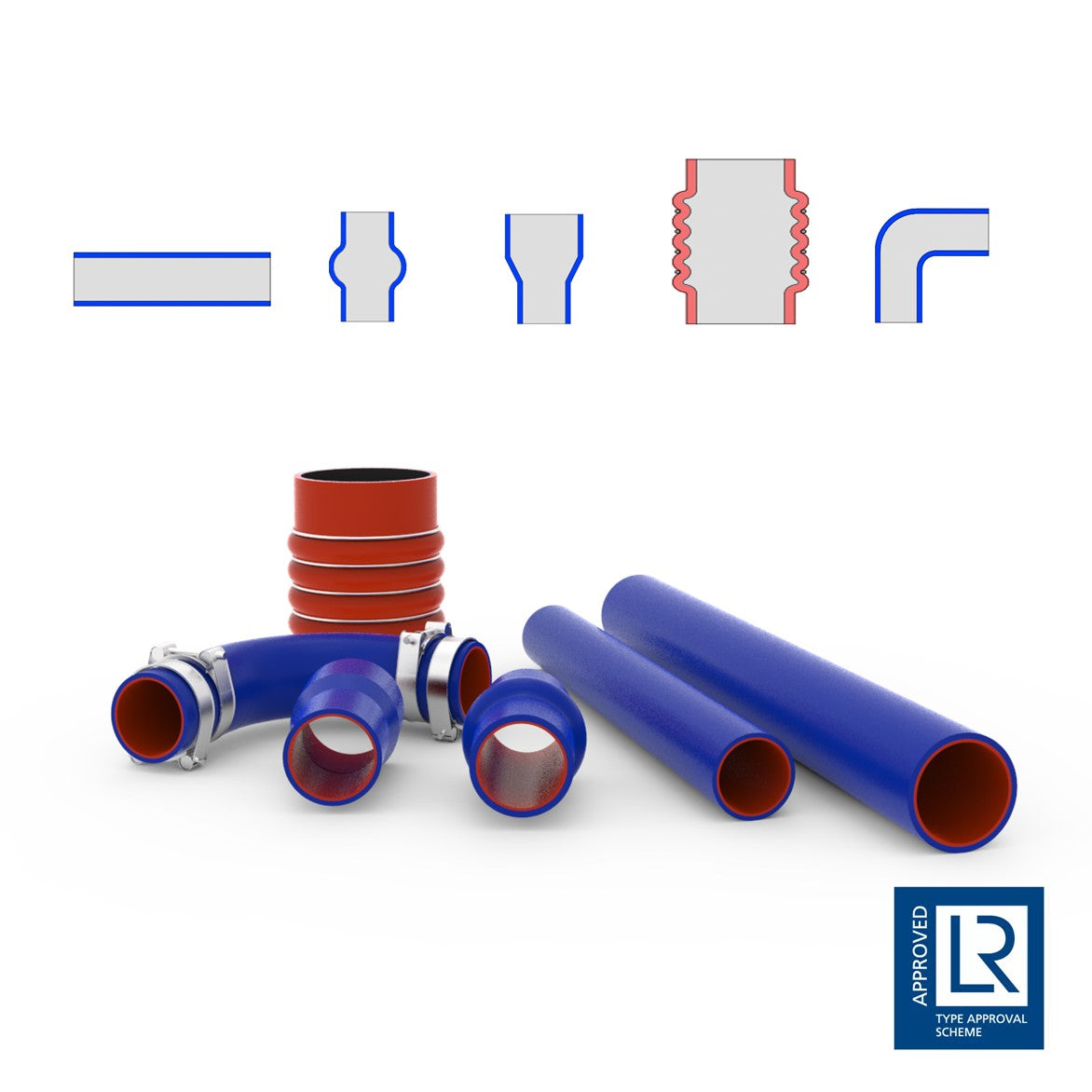
Our Lloyd's Register-certified Silicone hoses and bellows are produced in a comprehensive range of diameters, wall thicknesses and configurations for marine and industrial applications. Manufactured from high-grade silicone compounds, they provide wide temperature resistance, chemical compatibility and long-term ageing stability. Options include straight hose, convoluted bellows, moulded transitions and reinforced constructions for pressure or vacuum service.

Engineering documentation, test reports and material certificates can be supplied on request; contact our team for technical advice on selection, compatibility and custom dimensions. See the complete Silicone hoses and bellows collection for detailed specifications and ordering codes.

View full details

Contact us

We can manufacture many more custom products than those displayed on our website.

Contact us to discover all the possibilities if you didn't find what you are looking for.

Silicone hoses: types, sizes and maritime variants

Silicone hoses and bellows are used across marine and industrial systems for flexible connections, vibration isolation and thermal resilience. RuplaTec supplies silicone hoses and bellows in a wide range of diameters and configurations to suit different routing and connection requirements. Variants include convoluted bellows, straight and reinforced hoses, and designs intended for use with clamp, flange or bespoke end fittings. Lloyd's Register-certified variants are available for customers who specify maritime certification.

Technical considerations and procurement support for silicone hoses

When selecting silicone hoses, consider operating temperature ranges, pressure and vacuum requirements, chemical compatibility with conveyed media, reinforcement type and flex life under cyclic movements. Attention to end-fitting compatibility, hose curvature and support arrangements helps avoid premature wear. Material certificates, test reports and certification information can be provided on request to support procurement and compliance reviews. For a broader view of available formats and sizes, see the silicone hoses collection: Silicone hoses collection. Contact our technical team for application advice, specification reviews or to discuss customised options relevant to your installation.

FAQ

What applications are silicone hoses and bellows suitable for?

Silicone hoses and bellows are used across fluid transfer, air intake and exhaust systems, vibration isolation, and expansion joint applications. In maritime contexts they can be specified where regulatory certification is required; Lloyd's Register-certified silicone hoses and bellows are available for marine installations. Selection depends on the medium being handled, temperature range, mechanical movement and required certification. For application-specific guidance and compatibility checks, you can contact our team for technical advice.

What material properties and performance characteristics do silicone hoses offer?

Silicone hoses provide elasticity, flexibility over a wide temperature range and resistance to ozone and UV exposure. They typically exhibit good electrical insulation properties and recovery from compression. Chemical compatibility varies by compound and reinforcement, and mechanical strength depends on reinforcement construction. For critical applications, confirm the specific silicone compound and reinforcement type against operational demands and relevant certifications such as Lloyd's Register where applicable. Our team can assist in interpreting material data for your requirements.

How should I select the correct silicone hoses and bellows for my system?

Selecting silicone hoses involves assessing operating temperature, system pressure, fluid or gas compatibility, required diameter, mechanical movement, and end‑connection type. Consider reinforcement layers, wall thickness and any regulatory or classification requirements relevant to the application, including maritime certification where applicable. For installations subject to vibration or cyclic motion, choose designs rated for flexing. If you need help matching product features to system parameters, contact our technical team for tailored advice.

What inspection, maintenance and replacement criteria apply to silicone hoses and bellows?

Inspect silicone hoses regularly for surface cracking, hardening, softening, bulging, delamination, leaks or changes in flexibility. Maintenance typically involves cleaning with compatible, non‑aggressive detergents and avoiding solvents that may attack the compound. Replace hoses that show irreversible deterioration, leakage or mechanical damage, or that no longer meet functional or certification requirements. For maintenance schedules and end‑of‑life assessment specific to your operating conditions, consult our technical team for recommendations.