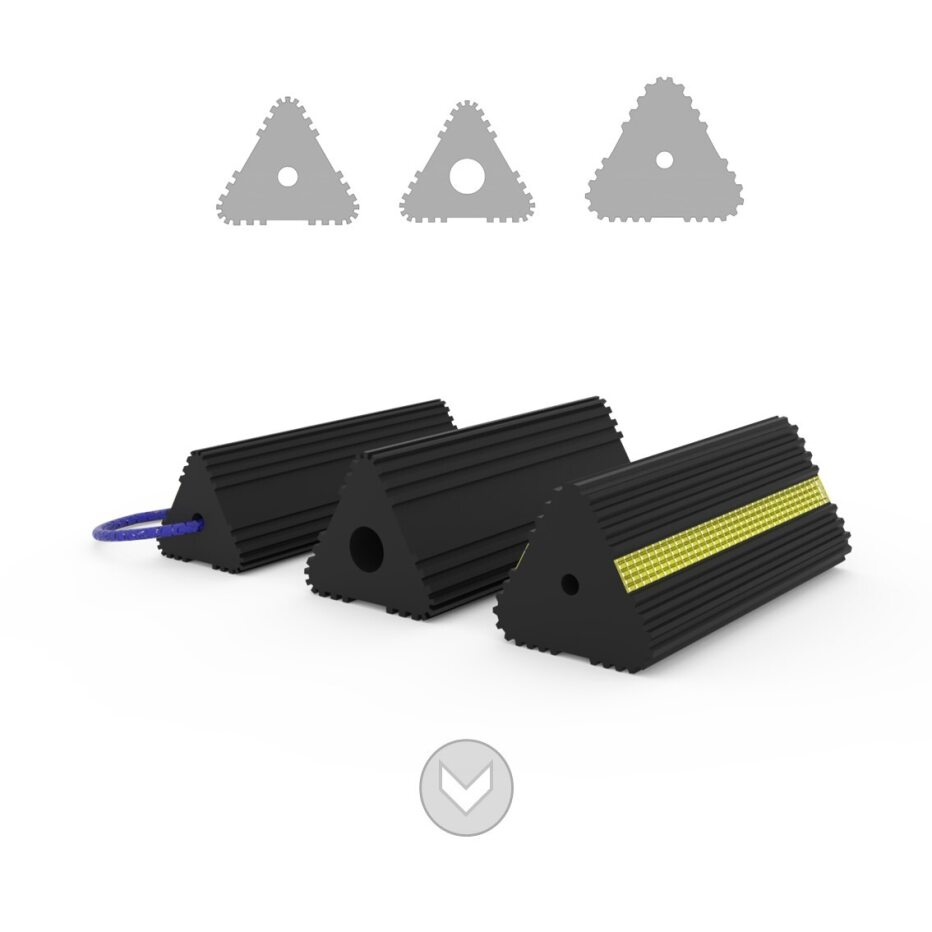
Wheel chocks are used to help secure parked vehicles by reducing the risk of unintended movement. They are positioned against a tire to provide a physical stop and additional stability when a vehicle is stationary. Wheel chocks are commonly applied in transport, logistics, recreational vehicle use and light industrial environments.
What are wheel chocks?
A wheel chock is typically a wedge-shaped block placed in front of or behind a wheel. It functions as a simple mechanical restraint designed to limit rolling during parking, loading, unloading or maintenance activities. Wheel chocks are often used in pairs, depending on the vehicle type and operational requirements.
Applications
Wheel chocks are suitable for a wide range of vehicle types. Selection depends on wheel diameter, vehicle weight and surface conditions.
| Vehicle type |
Typical use case |
| Cars |
Parking on slopes, maintenance, storage |
| Campers & caravans |
Stabilising vehicles during camping or storage |
| Motorcycles |
Securing parked motorcycles during transport or service |
| Trailers |
Loading, unloading and stationary parking |
| Vans & light commercial vehicles |
Warehouse and logistics environments |
Materials
Wheel chocks are commonly manufactured from rubber, polyurethane or other heavy-duty polymers. Material selection influences durability, grip and resistance to environmental exposure.
Rubber wheel chocks are frequently chosen for their friction characteristics and stable contact with both the tire and the ground surface. The operating environment and load conditions determine the most suitable material type.
Wheel chocks for aviation
For aviation environments, specialised solutions are available. Aircraft wheel chocks are designed to meet specific operational and safety requirements during ground handling. If you require chocks for aircraft applications, please see our aircraft wheel chocks collection.