
Skip to product information
1 of 1

Rubber strips

Rubber strips

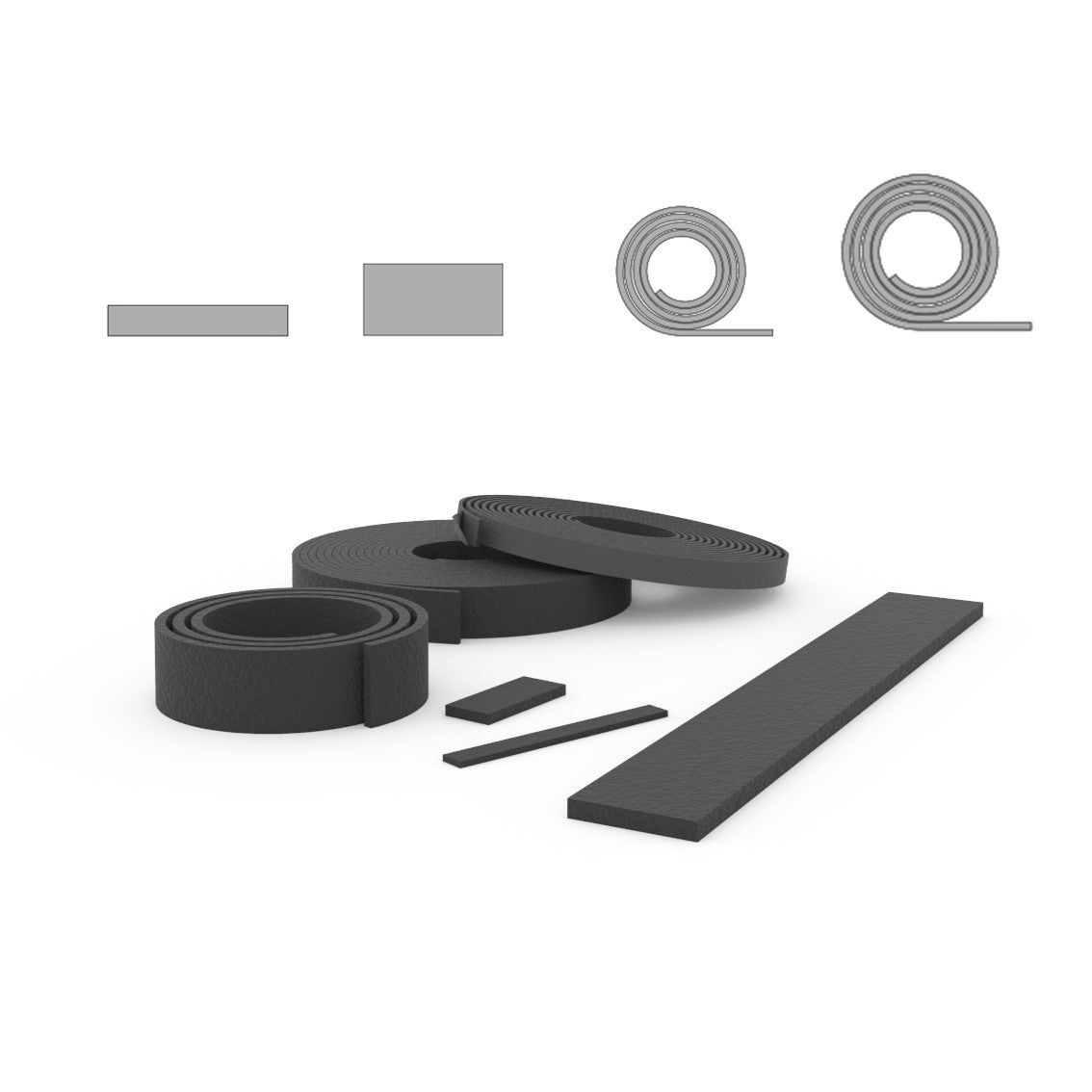
Our range of rubber strips covers multiple materials (EPDM, neoprene, NBR, silicone, SBR), profiles and thicknesses, including extruded and adhesive‑backed options. Available in a variety of widths, thicknesses and Shore hardnesses to suit sealing, vibration damping, edge protection and gasketing requirements. Materials can be specified for resistance to weathering, oils, fuels or elevated temperatures.

Standard and custom‑cut lengths are available; technical drawings and tolerances can be provided on request. For product selection and material recommendations contact our team for technical advice or consult the rubber strips collection for detailed specifications and available sizes.

We can supply Rubber strips in virtually any design and specification.

Custom production is possible based on technical drawings, material requirements, or performance criteria.

Most standard sizes are available from stock.

Contact us to discuss your requirements, and our technical specialists will guide you through the entire development and production process.
View full details

Contact us

We can manufacture many more custom products than those displayed on our website.

Contact us to discover all the possibilities if you didn't find what you are looking for.

Rubber strips — overview and materials

Rubber strips are supplied in a variety of elastomer types and can be selected to suit specific chemical, temperature and wear conditions. RuplaTec supplies rubber strip products in common materials such as EPDM, neoprene, nitrile and natural rubber, and other formulations may be available depending on application requirements. See our rubber strips collection for an indication of standard profiles and material options that are commonly used in industrial and marine environments.

Dimensions, profiles and technical considerations

Profiles include flat, round, square and custom gasket-like shapes in a range of thicknesses and widths. Selection is typically based on required compression, sealing performance, abrasion resistance and compatibility with adjacent materials. Technical data such as hardness (Shore A), tensile and elongation values may be requested or reviewed to support specification decisions. Cutting, bonding and vulcanised splicing are processes often used to produce finished lengths or bespoke profiles when standard sizes do not match installation needs.

Applications, installation and support

Rubber strips are used for sealing, vibration damping, edge protection and non-slip surfaces across shipbuilding, construction, transport and manufacturing sectors. Installation methods and surface preparation vary by substrate and environment; project-specific advice can help determine the appropriate adhesive, fastener or mechanical fixing. Contact our team for technical guidance or to discuss material selection and compatibility with your application.

FAQ

What types of rubber strips and materials are available for industrial use?

Rubber strips are offered in a range of elastomer types to suit different industrial requirements. Common materials include natural rubber, nitrile (NBR), neoprene, EPDM and silicone, each offering distinct properties for sealing, chemical resistance, temperature tolerance and wear. Selection should be based on the intended application environment and mechanical demands. For technical guidance on material selection and compatibility, you can contact our team for advice.

How should I select the correct rubber strip size and hardness for my application?

Choosing the appropriate rubber strip size and hardness requires assessment of the application’s sealing, load-bearing and movement requirements. Consider cross-sectional profile, thickness and Shore hardness relative to compression and wear expectations, along with temperature and chemical exposure. For dynamic applications, factor in fatigue and rebound properties. If you need assistance matching strip dimensions and hardness to performance criteria, our team can provide application-focused advice.

Can rubber strips be cut, joined or fabricated to custom lengths and profiles?

Rubber strips can be shaped and fabricated to meet application needs using mechanical cutting, die cutting and trimming. Joining methods include adhesive bonding, mechanical fastenings and, where appropriate, vulcanization or heat-based processes; the suitable method depends on material compatibility and service conditions. For specific fabrication requirements or recommendations on joining techniques and compatible adhesives, contact our team for technical advice.

What are common applications and performance considerations for rubber strips?

Rubber strips are used for sealing, edging, vibration damping, anti-slip surfaces, impact protection and noise reduction across industrial sectors. Key performance considerations include environmental exposure (temperature, UV, ozone), contact with oils or chemicals, abrasion resistance and compression set. Material selection must address these factors to ensure functional life and safety. For assistance evaluating application constraints and selecting an appropriate rubber strip, please consult our team.