
Skip to product information
1 of 1

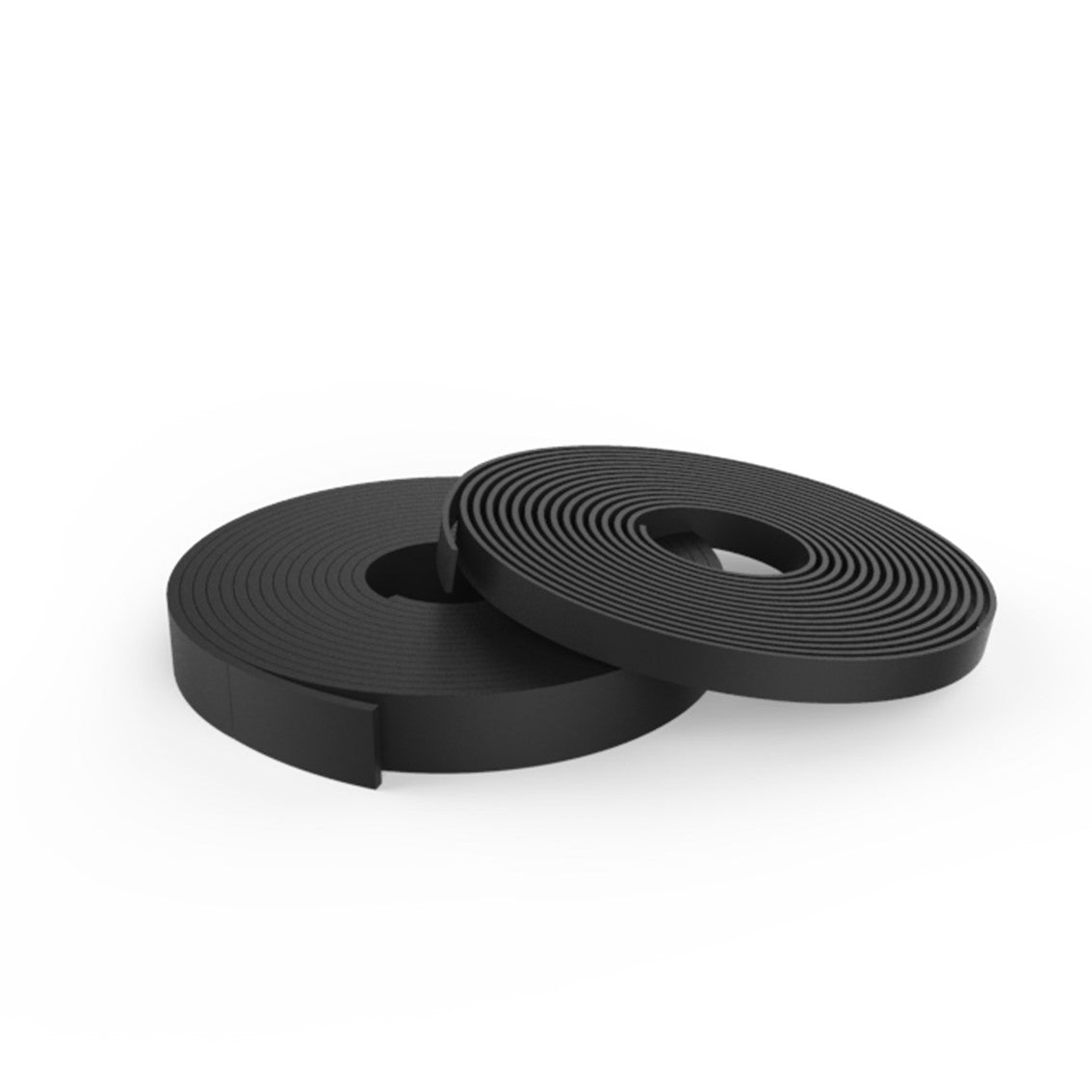
Solid black rubber strips

Solid black rubber strips

Solid black rubber strips are a flexible extrusion designed for sealing and edging and cushioning applications. Manufactured from a durable black elastomer, the strips provide compression resilience, abrasion resistance and reliable contact sealing between mating surfaces. Typical uses include panel edging, door seals, anti-vibration padding and spacer/cushion elements where a continuous, conformable rubber profile is required.

Available in multiple widths and thicknesses, these strips can be supplied in cut lengths or rolls; see the rubber strips collection for standard profiles. Contact our team for technical advice on hardness, material grades or custom sizes to meet application requirements.

We can supply Solid black rubber strips in virtually any design and specification.

Custom production is possible based on technical drawings, material requirements, or performance criteria.

Most standard sizes are available from stock.

Contact us to discuss your requirements, and our technical specialists will guide you through the entire development and production process.
View full details

Contact us

We can manufacture many more custom products than those displayed on our website.

Contact us to discover all the possibilities if you didn't find what you are looking for.

Solid black rubber strips — product overview

Solid black rubber strips are a flexible material used for sealing, edging and as a cushion between two surfaces in industrial and marine contexts. They are commonly supplied as extruded or cut lengths and are selected for applications where flexible compression and surface protection are required. For a range of sizes and profiles, see the rubber strips collection at /collections/rubber-strips.

Material and technical considerations for sealing and edging

Selection typically depends on compound, cross-section, and hardness. Depending on formulation, rubber strips can offer varying levels of elasticity, compression set resistance, and resistance to weathering or particular chemicals; these characteristics should be matched to the intended environment and load conditions. Attachment methods include adhesive bonding, mechanical fastening, or insertion into channels. When specifying, consider section dimensions, Shore hardness, and whether a glued or captive installation is preferred. Drawings, samples or test data can be requested to verify suitability where required.

Specification support and procurement guidance

Specification choices may affect performance in marine, construction or transport applications; consult material data and compatibility information when possible. RuplaTec supplies technical rubber and plastic products and can provide advice on selecting appropriate strip types, recommended installation practices, and options for custom lengths or profiles. Contact our team for technical guidance or to discuss specific project requirements.

FAQ

What are Solid black rubber strips commonly used for in sealing and edging applications?

Solid black rubber strips are a flexible material used for sealing and edging applications and can serve as a cushion between two surfaces. Typical uses include edge protection, gap sealing, vibration damping and surface isolation where a resilient barrier is required. The term "rubber strip" covers a range of profiles and formulations; suitability for a specific sealing or edging task depends on the operational environment and mechanical requirements. Contact our team for application guidance.

How should Solid black rubber strips be cut and fitted for installation?

Cutting and fitting of rubber strips is normally performed by marking the required length, using a sharp utility knife or heavy-duty shears for straight cuts, and deburring or smoothing cut edges before installation. Attachment methods can include pressure-sensitive tape, adhesives compatible with the rubber formulation, or mechanical fastenings where appropriate. A trial fit and secure point-by-point fixing help ensure an even seal. For specific installation recommendations, consult our team for technical advice.

What cleaning and maintenance practices are recommended for rubber strips?

Routine maintenance for solid black rubber strips involves cleaning with mild detergent and water and wiping dry. Avoid using strong solvents, aggressive chemical cleaners or abrasive tools that can degrade the rubber surface. Inspect strips periodically for signs of compression set, cracking or loss of elasticity and replace components that no longer provide an effective seal or cushion. If maintenance conditions are unclear, contact our team to discuss cleaning agents and inspection intervals appropriate for your application.

How can I determine chemical and temperature compatibility for a rubber strip application?

Chemical and temperature resistance depend on the specific rubber formulation used in the strip. Compatibility cannot be assumed; it should be confirmed by reviewing technical data for the chosen material or by performing application-specific compatibility tests. Where technical data is not available, carry out small-scale testing under representative conditions. Our team can assist in identifying suitable formulations and arranging compatibility checks based on the intended chemical exposure and operating temperature range.