
Skip to product information
1 of 1

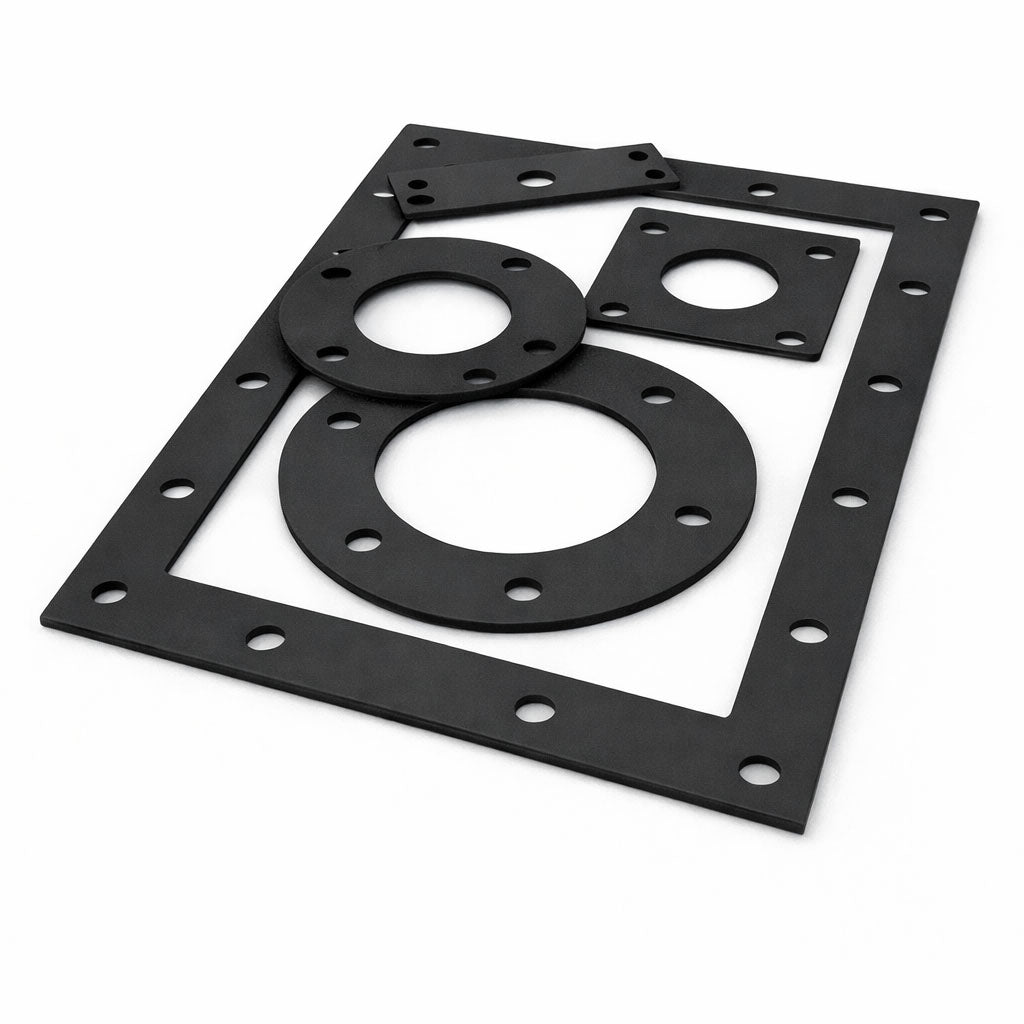
Custom EPDM rubber gaskets

Custom EPDM rubber gaskets

Hardness: 60–80 Shore A
Density: 1.10–1.30 g/cm³
Tensile Strength: 7–12 MPa
Elongation at Break: 250–400 %
Temperature Range: −40 °C to +120 °C
Resistance: water, UV, ozone, weathering


EPDM rubber has excellent resistance to water, UV radiation, ozone and weathering, but is not recommended for applications involving oil or fuel exposure.

We can supply Custom EPDM rubber gaskets in virtually any design and specification.

Custom production is possible based on technical drawings, material requirements, or performance criteria.

Most standard sizes are available from stock.

Contact us to discuss your requirements, and our technical specialists will guide you through the entire development and production process.
View full details

Contact us

We can manufacture many more custom products than those displayed on our website.

Contact us to discover all the possibilities if you didn't find what you are looking for.

What are custom EPDM rubber gaskets

Custom EPDM rubber gaskets are bespoke sealing components manufactured from EPDM elastomer to match specific part geometries and interface conditions. They are supplied as custom made gaskets or custom rubber seals in forms such as cut-to-shape rings, die-cut profiles and laminated assemblies for both static and limited-dynamic sealing duties.

Design intent, mounting constraints and sealing function define each part; material performance details for EPDM are available on separate technical documentation.

When do you need custom EPDM gaskets

Custom EPDM gaskets are required when off-the-shelf parts cannot meet unique flange geometries, non-standard cutouts or precise sealing widths. Typical triggers include retrofit applications, prototypes, assemblies requiring gaskets cut to size, or installations that need repeatable compression and controlled sealing areas.

They are also selected where adhesive backing, bonded layers or integrated features are needed to simplify assembly and ensure consistent positioning during production.

Applications of custom EPDM gaskets

EPDM gaskets are used across building envelopes (window and door seals, curtain-wall interfaces), HVAC components, water and drainage equipment, electrical enclosures and many types of industrial housings where weather, ozone and general-purpose sealing are primary concerns. They are common in applications requiring custom cut gaskets for irregular openings, cable entry seals and panel mount interfaces.

For ordering and configuration options consult our custom rubber gaskets collection for standard formats, tolerances and available fabrication methods.

FAQ

What are Custom EPDM rubber gaskets used for?

Custom EPDM rubber gaskets provide flange sealing for piping, valve connections and other jointed systems where prevention of water loss and containment of fluids is required. They are used across water handling, HVAC and general industrial applications where a resilient nonmetallic seal is needed.

Are Custom EPDM rubber gaskets suitable for water sealing applications?

Yes. EPDM rubber is commonly selected for water sealing because of its resistance to weathering, ozone and many aqueous environments. For application-specific compatibility with particular fluids or regulatory requirements, consult the technical team.

How do I request a Custom EPDM rubber gasket for a specific flange?

When requesting a custom gasket, provide details about the flange type, sealing surface, intended medium and any regulatory or material requirements. The supplier can then advise on suitable gasket design and confirm feasibility. Contact the technical team for guidance on bespoke requirements.

What maintenance is recommended to preserve sealing performance of Custom EPDM rubber gaskets?

Inspect gaskets periodically for signs of compression set, cracking or contamination and replace when degradation is evident. Clean sealing surfaces and avoid contact with incompatible chemicals such as petroleum-based oils and solvents. For maintenance intervals and best practices tailored to your installation, seek technical advice from the supplier.