Skip to product information
1 of 1

SKU:

Edge trim rubber profiles

Edge trim rubber profiles

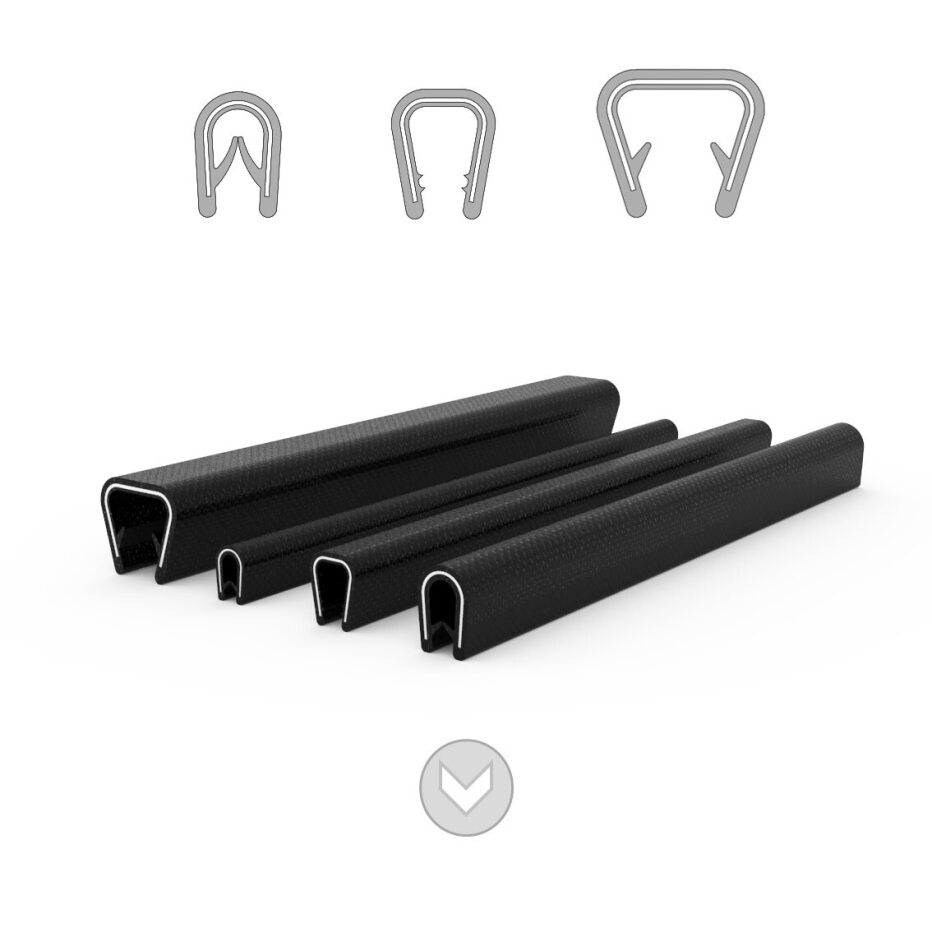
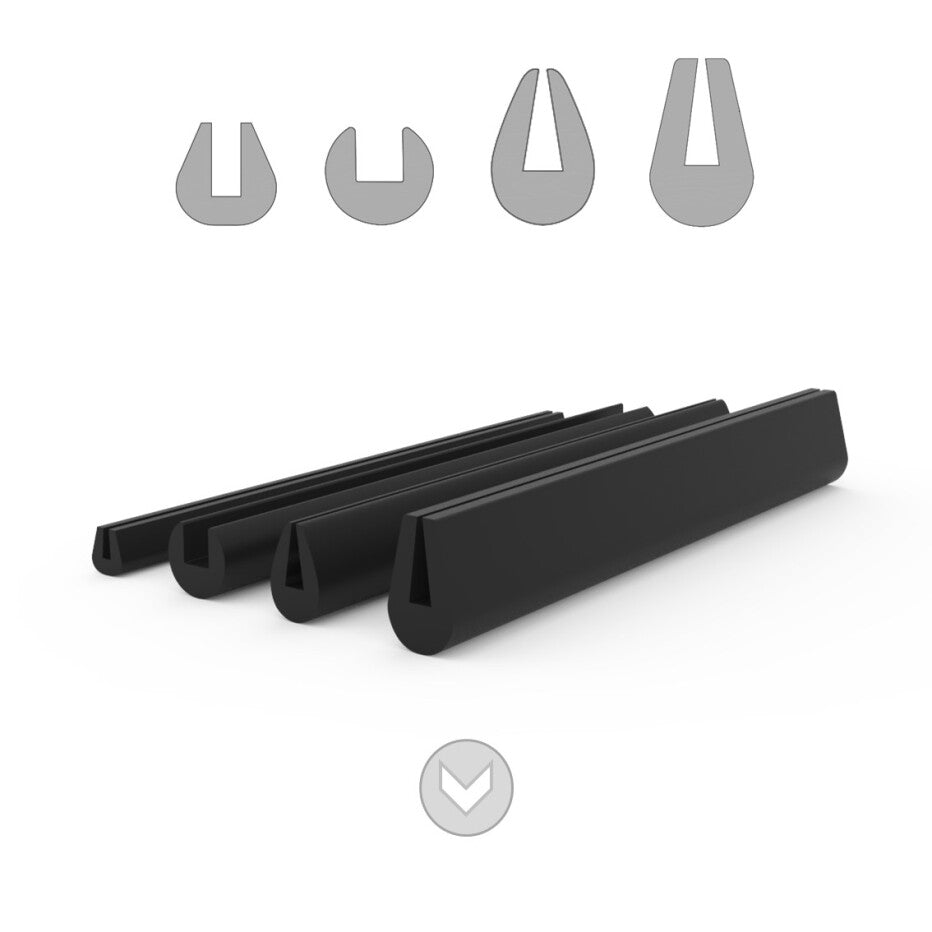
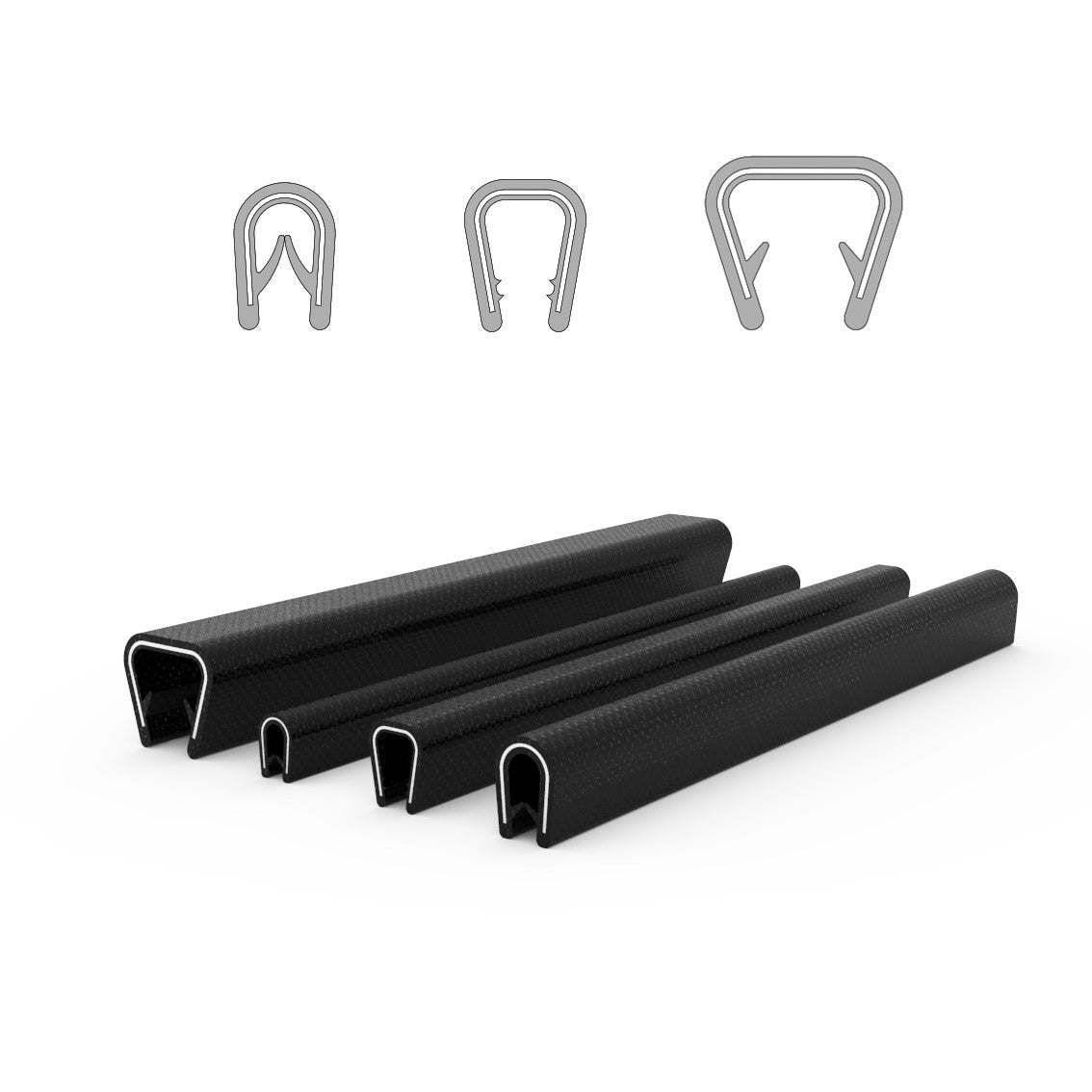
Our range of self-gripping rubber edge trim profiles provides durable seals and protective strips for panel and sheet edges from 2mm to 9.5mm. Manufactured in EPDM, neoprene and PVC compounds, these edge trim profiles deliver impact protection, abrasion resistance and vibration damping. Available cross-sections include U‑type, D‑type and P‑type grips to suit different flange geometries and retention requirements.

Standard and bespoke lengths are offered with options for adhesive backing, integrated sealing lips and varying wall thicknesses. For material selection, tolerance guidance or technical compatibility with metal and composite substrates, contact our technical team and consult the rubber edge trims collection for available profiles and dimensions.

We can supply Edge trim rubber profiles in virtually any design and specification.

Custom production is possible based on technical drawings, material requirements, or performance criteria.

Most standard sizes are available from stock.

Contact us to discuss your requirements, and our technical specialists will guide you through the entire development and production process.
View full details

Contact us

We can manufacture many more custom products than those displayed on our website.

Contact us to discover all the possibilities if you didn't find what you are looking for.

Edge trim rubber profiles — types and sizes

RuplaTec supplies a range of self-gripping rubber edge trim seals and strips designed to accommodate panel and sheet edges from 2 mm to 9.5 mm. Products in this category include closed and open-channel trims, bulb and lip variations, and simple U-profile strips used for edge protection, sealing and vibration isolation in industrial and marine applications. A selection of profiles and sizes can be reviewed in the rubber edge trims collection at /collections/rubber-edge-trims.

Selection guidance and technical considerations for rubber edge trims

When specifying edge trim rubber profiles, consider the edge thickness, required grip retention, chemical and environmental exposure, and any temperature or UV resistance needs relevant to the application. Profiles are commonly offered in different elastomeric compounds and flexible polymers; compatibility with the substrate and expected service conditions can affect compound choice. Typical considerations include ease of assembly, allowable compression, and whether additional adhesives or mechanical retention are necessary. Datasheets, test information or sample pieces may be available on request from suppliers; contact our team for advice on matching profile geometry and compound properties to your project requirements.

FAQ

What are edge trim rubber profiles and where are they used?

Edge trim rubber profiles are flexible seals and strips designed to protect and finish exposed sheet, panel, glass or plastic edges. They provide edge protection, sealing against dust and moisture, vibration dampening and an improved finished appearance. Typical applications include machine panels, enclosures, doors, glazing and fabricated sheet-metal assemblies. Selection depends on the required sealing performance, grip style and environmental exposure. For application-specific advice our team can assist with product selection and compatibility considerations.

How do self-gripping edge trims install, and can they be removed or replaced?

Self-gripping edge trims install by pushing the profile onto the board or flange so the internal gripping channel engages the substrate. This push-on retention avoids adhesives and enables straightforward installation. Removal is possible with appropriate trim tools and care to avoid damaging the mating edge or the profile; repeated removal may reduce retention effectiveness. For guidance on correct installation technique and suitable removal tools contact our team for practical recommendations.

What performance factors should I consider when specifying rubber edge trim profiles?

When specifying edge trim rubber profiles consider chemical and weather resistance, operating temperature range, hardness or compression characteristics, UV and ozone resistance, and intended mechanical stresses. Sealing requirements, flame or regulatory standards and compatibility with adjacent materials also affect material choice. Consult product data sheets and test results for performance verification. If you require help matching profile performance to an application, our team can provide technical assistance and recommend suitable options.

How do I select the correct edge trim size and profile for my application?

Choose an edge trim profile by assessing the substrate edge geometry and material thickness, required grip type (tight or loose fit), sealing needs and expected mechanical loading or dynamic movement. Consider appearance, installation method and environmental exposure when comparing profiles. Prototype fitting or samples are useful to verify fit and function. If you need support defining specifications or evaluating candidate profiles, contact our team for advice and assistance with selection.