
Skip to product information
1 of 2

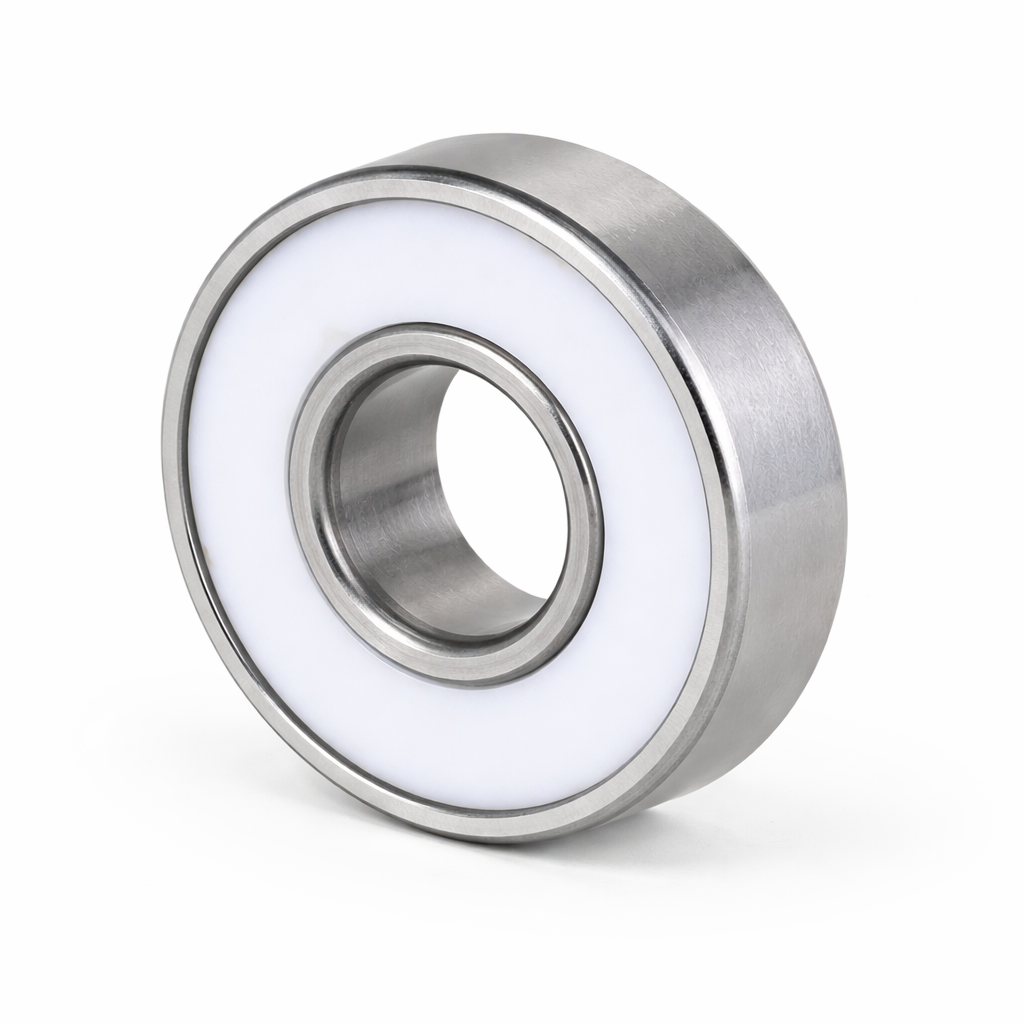
PTFE bearings

PTFE bearings

We can supply PTFE bearings in virtually any design and specification.

Custom production is possible based on technical drawings, material requirements, or performance criteria.

Most standard sizes are available from stock.

Contact us to discuss your requirements, and our technical specialists will guide you through the entire development and production process.
View full details

Contact us

We can manufacture many more custom products than those displayed on our website.

Contact us to discover all the possibilities if you didn't find what you are looking for.

Applications of PTFE bearings

PTFE bearings are typically used in applications requiring low friction, chemical inertness and clean operation, such as food processing machinery, chemical handling equipment, medical devices and precision instruments. The Teflon-based material offers low sliding resistance and resistance to many aggressive media, making it appropriate where lubrication is limited or contamination must be minimised; its low adhesion and favourable friction characteristics can improve performance in light-to-moderate load, slow-speed assemblies. These bearings may be less suitable for sustained heavy or shock loads, high-abrasion environments or continuous elevated-temperature use, since PTFE can creep and exhibit accelerated wear under those conditions. Selection of ptfe components depends on the expected load and thermal profile.

FAQ

What are PTFE bearings?

PTFE bearings are rolling-element bearings that use PTFE (Teflon) for the inner and outer rings combined with ceramic bearing balls such as zirconia. The combination provides a non-metallic bearing solution with low friction, inherent self-lubrication and good chemical resistance compared with conventional metallic bearings.

What are common applications for PTFE bearings?

PTFE bearings are typically used where corrosion resistance, chemical compatibility, electrical insulation or contamination control are required. Typical application areas include valves and pumps in corrosive media, precision instruments, clean or high-purity environments and assemblies that require non-conductive or non-magnetic components.

How do PTFE bearings differ from metal bearings?

Compared with metal bearings, PTFE bearings use non-metallic rings that resist corrosion and provide self-lubricating, low-friction performance. The use of zirconia balls offers good hardness and chemical stability. These differences lead to distinct load, stiffness and wear characteristics, so selection should be based on the application requirements rather than assuming direct interchangeability with metal bearings.

What maintenance do PTFE bearings require?

PTFE bearings generally require less external lubrication than metal bearings but should be inspected periodically for wear, contamination and proper function. Cleaning should be performed with agents compatible with PTFE and zirconia and avoid abrasive methods. For application-specific maintenance guidance or material compatibility questions, consult the manufacturer or technical team.