
Skip to product information
1 of 3

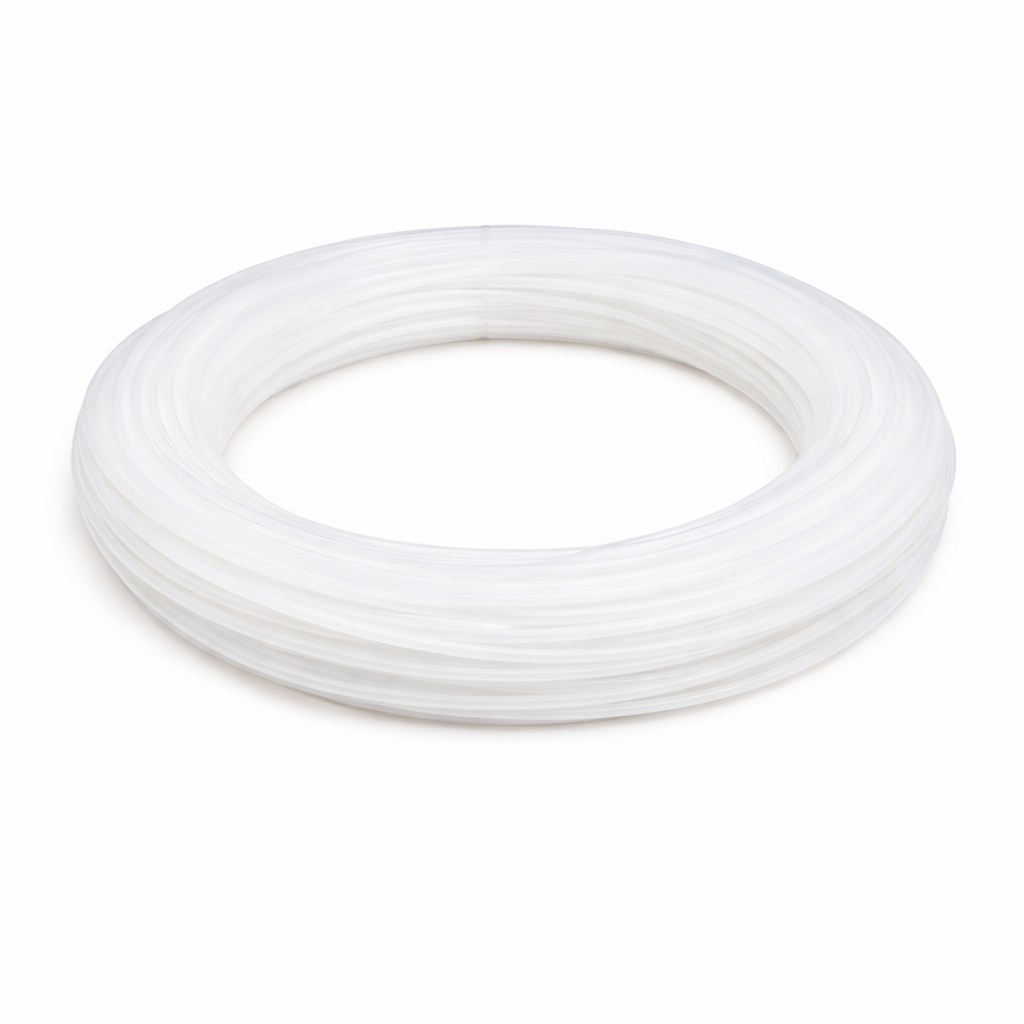
PTFE Tubes

PTFE Tubes

We can supply PTFE Tubes in virtually any design and specification.

Custom production is possible based on technical drawings, material requirements, or performance criteria.

Most standard sizes are available from stock.

Contact us to discuss your requirements, and our technical specialists will guide you through the entire development and production process.
View full details

Contact us

We can manufacture many more custom products than those displayed on our website.

Contact us to discover all the possibilities if you didn't find what you are looking for.

Applications of PTFE Tubes

PTFE tubes are typically used to reduce resistance and guide filament in filament-feeding systems, extrusion heads and other guided-feed applications where low friction and chemical inertness are important. Teflon's combination of a low coefficient of friction, broad thermal stability and high chemical resistance makes it a common choice for polymer feed paths, insulating bushings and non-reactive fluid or gas routing in industrial processes.

PTFE may be less suitable where high mechanical load, abrasive wear or dimensional rigidity are required, due to its limited wear resistance and tendency to creep under sustained stress; in those cases harder polymers or metal liners are often preferred. Available variants are described in the ptfe collection.

FAQ

What are PTFE Tubes used for?

PTFE (Teflon) Tubes are used to guide filament and reduce resistance within filament feed systems. Their low-friction, non-stick inner surface helps ensure smooth movement of filament through feed paths and reduces the likelihood of feed interruptions.

How do PTFE Tubes improve filament feed performance?

PTFE Tubes provide a smooth, low-friction channel that reduces drag on the filament. This can result in more consistent feeding, fewer jams and improved reliability of the filament delivery path.

Which filaments are compatible with PTFE Tubes?

PTFE Tubes are compatible with a wide range of common thermoplastic filaments, including flexible and rigid types. Highly abrasive filaments can increase wear on the tube, so compatibility should be evaluated for abrasive materials and technical advice obtained if necessary.

How should PTFE Tubes be installed and maintained?

Install PTFE Tubes by cutting ends square, removing burrs and securing them with appropriate fittings or retainers. Keep tubes clean, inspect regularly for wear or deformation and replace when internal roughness or damage appears. For specific installation guidance contact the technical team.