
Skip to product information
1 of 1

Rubber blocks

Rubber blocks

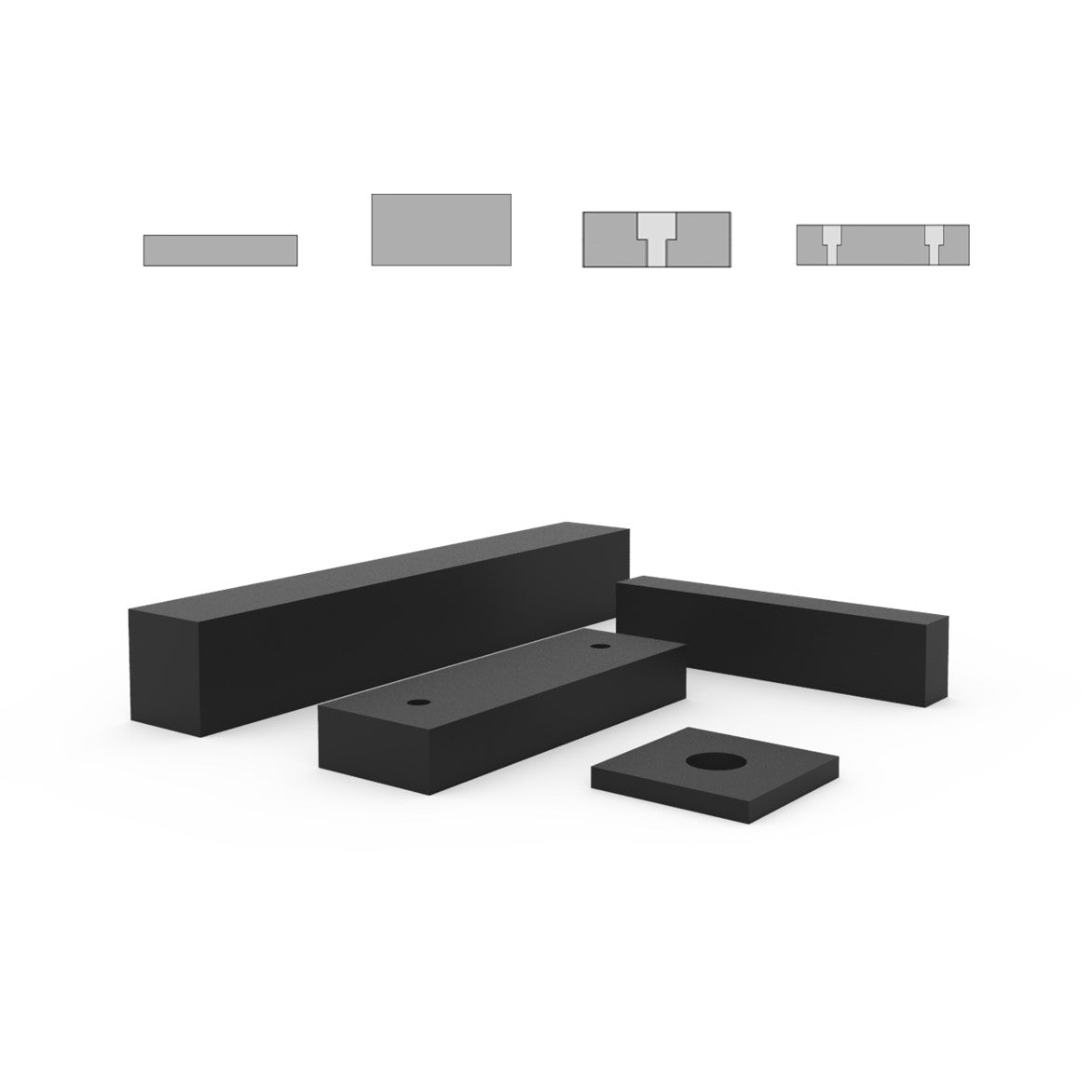
Rubber blocks in multiple sizes and durometers provide anti-vibration, anti-skid and noise reduction for HVAC units, compressors and industrial plant. Available as 10mm thick pads and 50mm square mats, these solid rubber blocks are suitable for load-bearing isolation, machine mounting and surface protection. Materials include NBR, EPDM and neoprene to suit oil, heat and weather resistance requirements.

Standard and custom rubber blocks can be specified by size, hardness and hole patterns to meet application requirements; options include bonded steel plates and non-slip textures. For related impact and protection components see our Rubber bumpers & protection profiles. Contact our team for technical advice on material selection, load calculations and custom fabrication.

We can supply Rubber blocks in virtually any design and specification.

Custom production is possible based on technical drawings, material requirements, or performance criteria.

Most standard sizes are available from stock.

Contact us to discuss your requirements, and our technical specialists will guide you through the entire development and production process.
View full details

Contact us

We can manufacture many more custom products than those displayed on our website.

Contact us to discover all the possibilities if you didn't find what you are looking for.

Rubber blocks — applications and compatibility

Rubber blocks are used as anti-vibration pads, non-slip mounts, spacers and protection elements across marine, industrial and construction settings. Typical uses include machine isolation, HVAC and compressor mounting, cargo securing and temporary support under heavy components. RuplaTec supplies a range of rubber blocks intended for professional specification and integration into larger assemblies; material selection and installation method should be matched to the application environment and load conditions.

Custom rubber blocks, materials and sizing

Rubber blocks can be specified in different elastomers, hardnesses and geometries to suit resistance to oil, ozone, salt water or UV exposure. Standard shapes include square, rectangular and cylindrical pads in varying thicknesses, while drawings and bespoke geometries for custom rubber blocks can be requested where project requirements demand specific tolerances or mounting features. Information on material properties, recommended compressive loads and dimensional options may be provided on request to support engineering evaluation.

Selection guidance and technical support

When selecting rubber blocks consider load per pad, contact area, expected movement and environmental exposure. For related protection profiles and impact control refer to the rubber bumpers and protection profiles collection for compatible components. For specification assistance or bespoke enquiries, contact our technical team who can advise on suitability, potential testing requirements and available documentation on request.

FAQ

What are rubber blocks and where are they typically used?

Rubber blocks are solid elastomer components used to provide support, spacing, anti-slip function and mechanical isolation in industrial settings. Common applications include anti-vibration pads, non-slip feet and cushioning for equipment such as HVAC systems, compressors and general machinery. Depending on material selection, rubber blocks can offer abrasion resistance, chemical resistance or electrical insulation. They are available in standard forms and can also be produced as custom rubber blocks to meet specific operational or dimensional requirements.

How do I choose the right rubber blocks or custom rubber blocks for my application?

Choosing suitable rubber blocks requires evaluating operating load, expected dynamic forces, environmental conditions and surface characteristics. Consider factors such as compressive load, temperature range, exposure to oils or chemicals, and whether vibration isolation or anti-skid performance is the priority. Shape, hardness and interface design affect deformation and service life. For bespoke needs, specify dimensional tolerances and performance criteria when requesting custom rubber blocks. You can contact our team for advice on material selection and compatibility with your application.

Can rubber blocks provide effective vibration isolation and noise reduction?

Rubber blocks can contribute to vibration isolation and noise reduction by damping mechanical energy and decoupling equipment from supporting structures. Effectiveness depends on the block material’s damping characteristics, geometry and the vibration frequency and amplitude encountered in service. Not all rubber blocks suit every vibration profile, so assessing the application’s dynamic behavior is important. For critical installations such as HVAC units and compressors, consider application-specific testing or consultation to determine whether a particular rubber block design will meet isolation requirements.

What are the recommended installation and maintenance practices for rubber blocks?

Install rubber blocks so they make full, stable contact with mating surfaces and avoid over-compression or twisting that can accelerate wear. Use fastening or adhesive methods compatible with the block material and verify chemical compatibility before applying solvents or primers. Maintenance should include periodic inspection for cracking, distortion, hardening or chemical attack, and cleaning with mild detergents as appropriate. Replace blocks that show significant degradation. Contact our team for guidance on installation techniques and maintenance schedules tailored to your equipment.