
Skip to product information
1 of 1

Rubber strips & blocks

Rubber strips & blocks

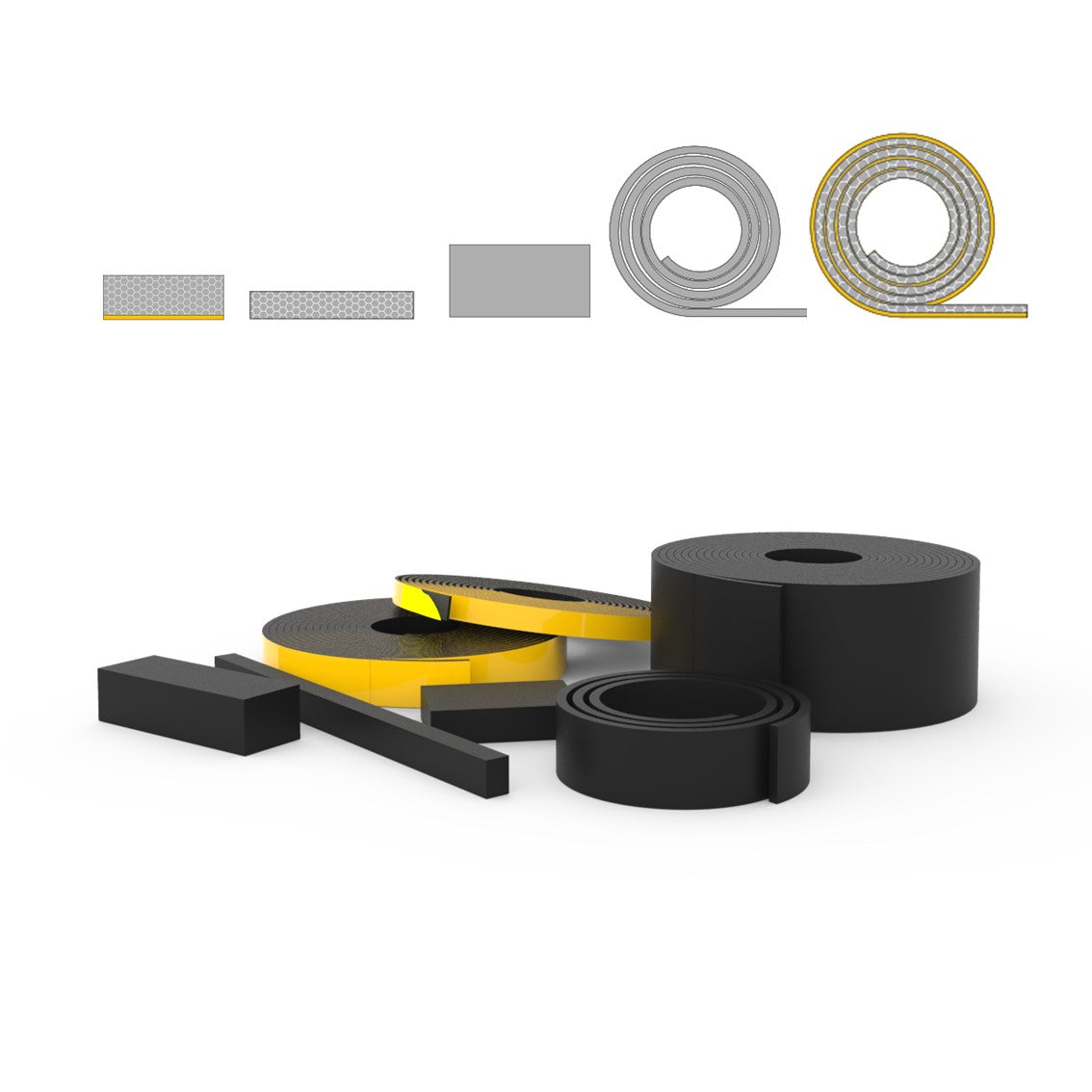
Solid rubber strips and rubber blocks are supplied in multiple thicknesses (1.0mm, 1.5mm, 2.0mm, 3.0mm) and standard 5m lengths, with block formats for machining. Manufactured as continuous solid profiles, these products deliver predictable compression characteristics, dimensional stability and surface consistency for sealing, padding and vibration-damping applications. Available forms include rolls, extruded strips and rectangular blocks suitable for cutting, bonding or machining.

Typical applications include gasketing, edge protection, anti-slip strips and vibration isolation. Custom sizes and material grades can be specified; contact our technical team for application support. See the rubber strips collection for available profiles and sizes.

We can supply Rubber strips & blocks in virtually any design and specification.

Custom production is possible based on technical drawings, material requirements, or performance criteria.

Most standard sizes are available from stock.

Contact us to discuss your requirements, and our technical specialists will guide you through the entire development and production process.
View full details

Contact us

We can manufacture many more custom products than those displayed on our website.

Contact us to discover all the possibilities if you didn't find what you are looking for.

Product range and common applications

Rubber strips and blocks are used in a range of industrial and marine settings for sealing, cushioning, anti-slip, vibration damping and general protection. Typical formats include solid rubber strips in thin sheet form (examples: 1mm, 1.5mm, 2mm, 3mm thickness) offered in continuous lengths such as 5m, and larger rubber blocks for machining or fixture work. Materials and compound choices can affect abrasion resistance, elasticity and chemical compatibility, so selection is guided by the intended application and operating environment.

Specifications, customization and technical guidance

Product specification options commonly include different rubber types, shore hardness ranges and dimensional cuts; customers may request cut-to-length pieces, bonded or adhesive-backed variants, or custom-size blocks. Datasheets or test information may be available on request or through technical enquiry channels. For detailed selection, procurement and compatibility clarification, contact our technical team for advice. For an overview of standard items see the rubber strips range and the rubber blocks range. RuplaTec supplies technical rubber and plastic products to industrial and marine customers and can assist with product selection and supply enquiries.

FAQ

What materials and grades are available for rubber strips & blocks?

Rubber strips and blocks are offered in a range of materials and commercial grades tailored to different performance requirements. Selection is based on properties such as hardness, abrasion resistance, chemical compatibility and temperature tolerance. Material options vary by supplier and application; consult product data sheets or contact our team for material guidance. Providing details about the intended use helps determine the appropriate grade for solid rubber strips or rubber blocks without relying on generic assumptions.

How do I choose the correct rubber strip thickness and hardness?

Choosing rubber strip thickness and hardness depends on the functional requirements of the application, including load-bearing, sealing, impact absorption and flexibility. Thicker or firmer material may suit heavy-duty wear or static loads, while softer or thinner sections better accommodate sealing and vibration isolation. Consider operating environment, mating surfaces and expected lifetime when specifying rubber strip thickness or hardness. Our team can review application parameters and recommend suitable options for solid rubber strips and rubber blocks.

Can rubber strips and blocks be cut, machined or bonded to custom sizes?

Yes. Rubber strips and blocks can be die-cut, slotted, CNC machined, waterjet cut or bonded to meet specific shapes and tolerances. The most suitable processing method depends on material type, part geometry and required tolerances. Adhesive selection for bonding should match the rubber compound and service conditions. For precise machining requirements or complex shapes, consult our technical team to confirm manufacturability and recommended fabrication processes for custom rubber strips and blocks.

What industries and applications commonly use solid rubber strips and rubber blocks?

Solid rubber strips and blocks are used across many sectors for sealing, gasketing, wear protection, vibration isolation, anti-slip surfaces and impact mitigation. Typical applications include machine mounts, conveyor guides, door seals and protective edging. Material selection and design vary with industry needs such as chemical exposure, temperature extremes or mechanical wear. Provide application details to our team for targeted advice on which rubber strip or rubber block solution best aligns with functional requirements.