
Skip to product information
1 of 1

Silicone hoses - Reducers

Silicone hoses - Reducers

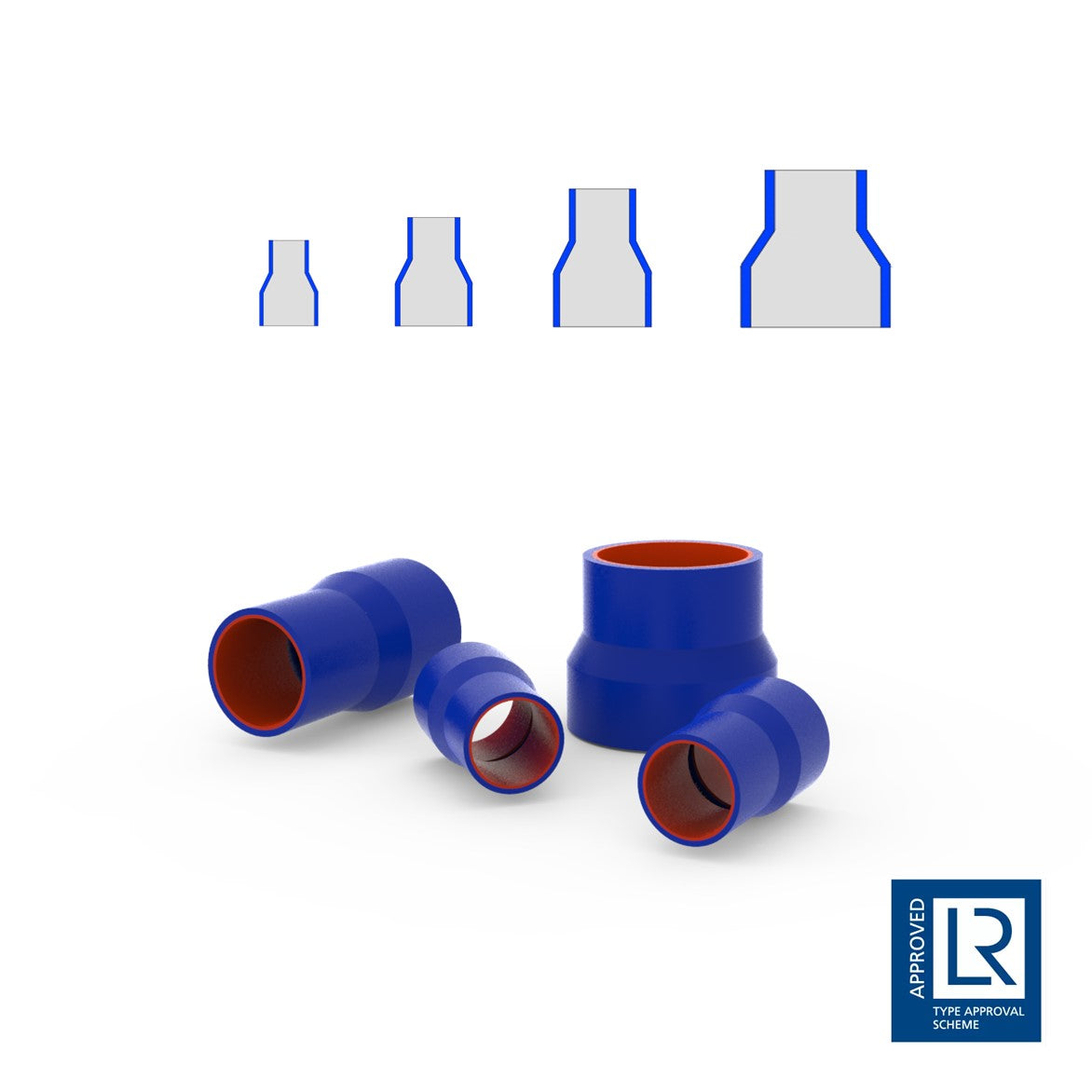
Silicone reducer hoses in a full range of diameters provide compression-moulded or mandrel-bent transitions for fluid, coolant and charge-air systems. Manufactured from high-performance silicone elastomer with textile reinforcement, these reducers offer flexible connections between mismatched pipework and can be supplied in various wall thicknesses and profiles to suit pressure and flexing requirements.

Any bespoke length and diameter combination can be manufactured. For the full range of straight reducer silicone hoses and standard sizes see our full range of straight reducer silicone hoses. Contact our team for technical advice on material grades, reinforcement options and clamp compatibility.

We can supply Silicone hoses - Reducers in virtually any design and specification.

Custom production is possible based on technical drawings, material requirements, or performance criteria.

Most standard sizes are available from stock.

Contact us to discuss your requirements, and our technical specialists will guide you through the entire development and production process.
View full details

Contact us

We can manufacture many more custom products than those displayed on our website.

Contact us to discover all the possibilities if you didn't find what you are looking for.

Silicone hose reducers — sizes and applications

Silicone hose reducers provide a means to connect differing diameters in fluid or air systems commonly found in shipyards, construction, transport and industrial installations. These reducer hoses are used where a change of diameter is required between components such as pipes, ducts or equipment in industrial and marine contexts. RuplaTec supplies technical rubber and plastic products, including silicone reducer hoses that can be selected to match system diameters and connection types.

Customization, materials and technical enquiries

Bespoke length and diameter combinations can be produced on request to suit specific routing, clearance or performance needs. Material selection, wall thickness and coupling arrangements are typically considered during specification; detailed options or compatibility notes can be discussed with the project team. For a wider range of sizes and standard straight reducer profiles see the full range of straight reducer silicone hoses full range of straight reducer silicone hoses. Customers are invited to contact the technical sales team for advice on sizing, jointing methods and suitability for particular media or operating conditions.

FAQ

What are reducer silicone hoses and where are straight reducer silicone hoses used?

Reducer silicone hoses are flexible connectors that transition between two different diameters, commonly supplied as straight reducer silicone hoses for use in fluid, air intake, and cooling systems. They provide elasticity and vibration dampening while accommodating misalignment between mating components. Typical applications include industrial, automotive and HVAC systems where a controlled diameter change is required. Material selection and end configuration influence performance; consult technical requirements to confirm suitability for pressure, temperature and media compatibility.

How do I choose the correct diameter and bespoke length for a silicone reducer hose?

To select an appropriate reducer silicone hose, identify the inlet and outlet diameters, operating media and required length. Straight reducer products are available across a wide range of diameters, and bespoke length and diameter combinations can be manufactured to meet non-standard requirements. Consider installation space, clamp style and mating fittings during selection. If material compatibility or dimensional tolerances are critical for your application, contact our team for technical advice and to confirm manufacturing options and limits.

What material and performance characteristics should I expect from silicone hoses?

Silicone hoses are made from elastomeric silicone compounds that provide flexibility, broad temperature resilience and resistance to many automotive fluids and aqueous media. Silicone exhibits low compression set and maintains elasticity under thermal cycling, making it suitable for dynamic assemblies. Chemical compatibility varies by compound; some media and aggressive solvents may degrade silicone. For applications involving unusual chemicals, high pressure, or regulatory constraints, provide material specifications to assess suitability. Contact our team to review material options and compatibility for your specific operating environment.

What are recommended installation and maintenance practices for silicone reducer hoses?

Install reducer silicone hoses with compatible clamps and properly aligned fittings to avoid localized stress and premature wear. Use clamp types recommended for silicone and avoid over-tightening, which can cut or distort the hose. Inspect assemblies regularly for abrasion, hardening, cracking or joint leaks, and replace hoses that show signs of degradation. Clean silicone hoses with mild detergent and water; avoid aggressive solvents that can damage the material. For guidance on clamp selection, torque considerations or installation for specific operating conditions, contact our team for technical assistance.