Collection: PVC

What is PVC

PVC is a widely used synthetic plastic material. The abbreviation PVC stands for Polyvinyl Chloride. It is produced by polymerising vinyl chloride and can be manufactured in different formulations.

Depending on the formulation, PVC can be either rigid or flexible. This versatility makes PVC suitable for a wide range of technical and industrial applications.

What are the main properties of PVC

PVC is known for its good mechanical strength, durability and resistance to moisture. The material has a stable structure and performs well under normal environmental conditions.

Flexible PVC offers elasticity and impact resistance, while rigid PVC provides higher stiffness and dimensional stability.

What is PVC used for

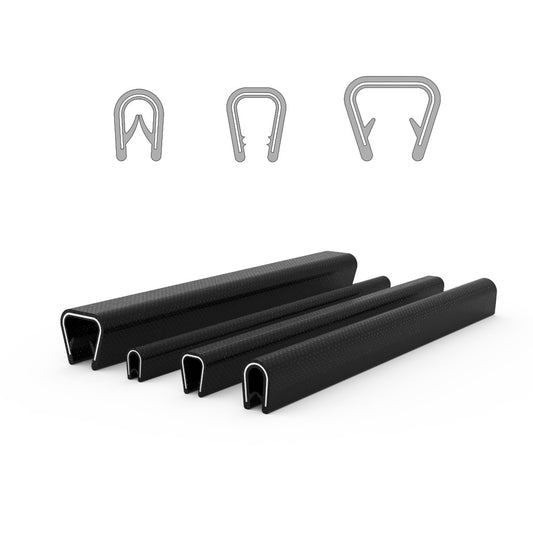
PVC is used in many industrial and technical applications where durability and ease of processing are important. Typical uses include profiles, sheets, tubes, protective components and insulation materials.

Because PVC can be produced in different grades, it is suitable for both structural and protective applications.

Is PVC suitable for outdoor use

PVC can be suitable for outdoor use, depending on the formulation. Many PVC compounds are designed to resist weathering and moisture when used in exterior environments.

However, long-term exposure to sunlight can affect standard PVC. For outdoor applications, UV-stabilised PVC grades are commonly used.

What is the temperature range of PVC

PVC can typically be used within a temperature range from approximately −15 °C to +60 °C. Within this range, the material maintains its functional properties under normal conditions.

The exact temperature range of PVC depends on whether the material is rigid or flexible and on the specific formulation used.