
Skip to product information
1 of 1

Honeycomb rubber matting

Honeycomb rubber matting

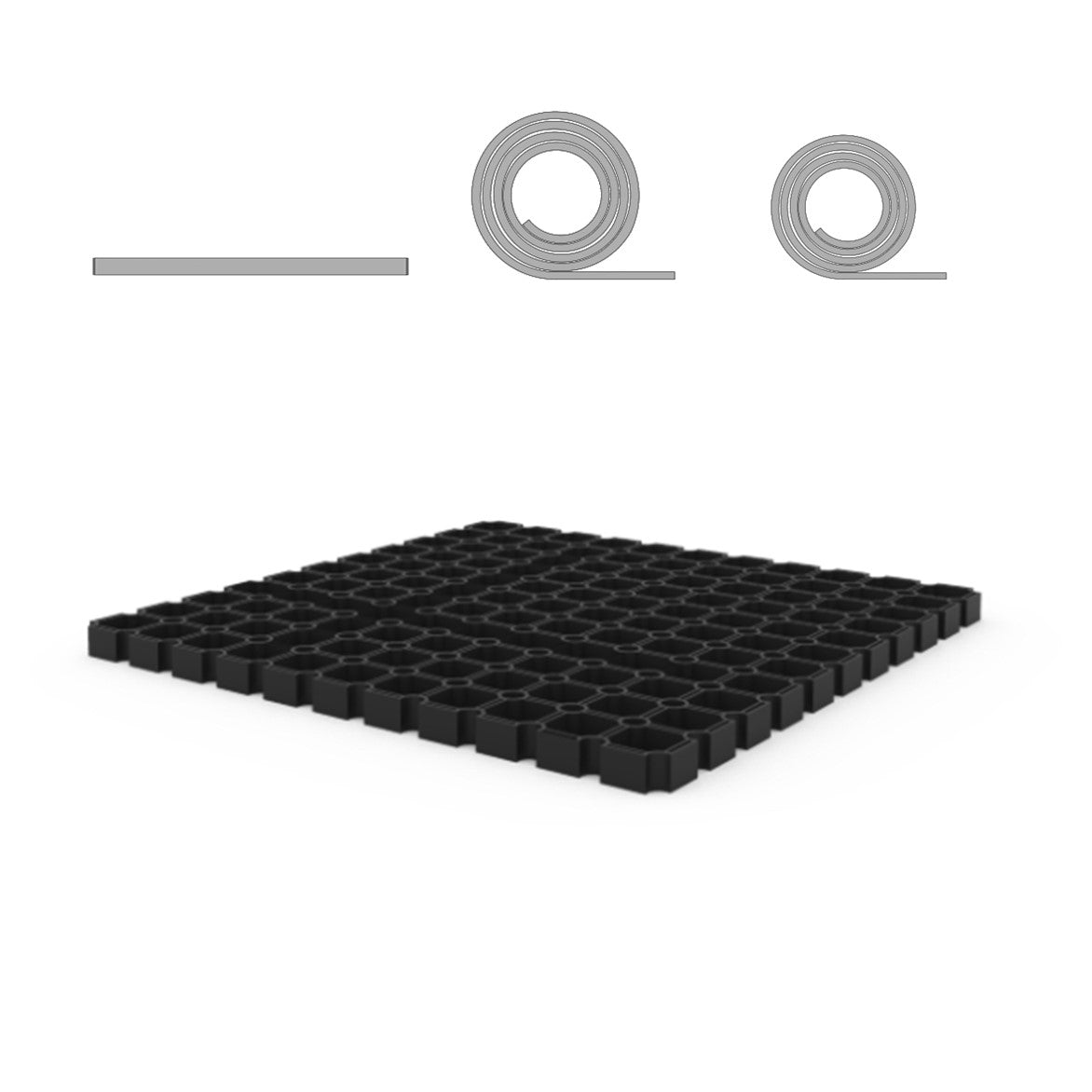
Honeycomb rubber matting features an open honeycomb pattern that traps dirt and allows rapid drainage of water and debris, making it suitable for high-traffic entrances and external walkways. Manufactured from a heavy-duty rubber compound, the matting provides durable wear resistance, anti-slip footing and effective scraper action while remaining flexible for threshold transitions and easy maintenance.

Available in three standard sizes with the 91cm x 152cm option as the best-selling size, the product can be specified for indoor or outdoor entrance systems and trimmed on site for bespoke fits. For specification support and technical advice see our rubber matting collection or contact our team.

We can supply Honeycomb rubber matting in virtually any design and specification.

Custom production is possible based on technical drawings, material requirements, or performance criteria.

Most standard sizes are available from stock.

Contact us to discuss your requirements, and our technical specialists will guide you through the entire development and production process.
View full details

Contact us

We can manufacture many more custom products than those displayed on our website.

Contact us to discover all the possibilities if you didn't find what you are looking for.

Honeycomb rubber matting — sizes and product overview

Honeycomb rubber matting is supplied in three standard sizes to suit a range of entrance and floor applications. One standard dimension of 91 cm x 152 cm is commonly used for regular doorways and threshold areas, with other sizes available to match different opening widths and layouts. RuplaTec supplies this style of matting as part of its rubber matting assortment; detailed size options can be confirmed on request.

Applications, performance and maintenance guidance

This honeycomb design is used where surface traction, debris retention and drainage are considerations, for example in commercial entrances, workshop thresholds and light industrial walkways. Depending on site requirements, the matting can be placed on level, clean surfaces and may be trimmed to fit around fixtures. Routine maintenance typically involves removal of loose debris and periodic washing; specific cleaning methods will depend on the installation environment and material composition. For advice on suitability for particular environments, contact our technical team.

Specification options and ordering

Standard size options are offered alongside possible cut-to-size supply or bulk quantities where required. Technical data, dimensional tolerances and material options can be discussed with procurement or engineering contacts. For related products and alternative matting formats, see the rubber matting collection or contact our team for application-specific advice.
FAQ

What is honeycomb rubber matting and where is it used?

Honeycomb rubber matting is a resilient mat with a honeycomb cell profile designed to provide scraping, drainage and cushioning at entrances and high-traffic walkways. The rubber honeycomb mat traps dirt and moisture while allowing liquids to pass through the cell structure, reducing slip hazards and protecting interior floor finishes. It is commonly specified for commercial and industrial entrance areas, vestibules and threshold zones where regular foot traffic and exposure to debris or weather occur.

What sizes are available and how do I choose the correct size?

The product is offered in three standard sizes to suit different entrance widths and traffic patterns. Selecting the appropriate size depends on the opening dimensions, expected footfall and the type of footwear or equipment that will pass over the matting. For projects requiring a specific layout or advice on size selection, contact our team for technical guidance to ensure the chosen matting meets functional and safety requirements.

How should honeycomb rubber matting be cleaned and maintained?

Routine maintenance typically involves shaking out or vacuuming loose debris, brushing the surface, and hosing the matting to remove ingrained dirt. For heavier soiling, a mild detergent and soft brush may be used, followed by thorough rinsing and air drying. Avoid solvents or aggressive chemicals that can degrade rubber compounds. Implement a regular cleaning schedule based on traffic levels to maintain performance and to reduce wear on surrounding floor finishes.

What are the installation and slip-resistance considerations for outdoor rubber honeycomb mats?

Install the matting on a level, stable surface to ensure full contact and prevent tripping hazards. The honeycomb cell design aids drainage and contributes to slip resistance under wet conditions, but suitability should be assessed against site-specific factors such as incline, surface finish and expected contaminants. For fixed installations or complex sites, consult our team for advice on perimeter retention, transitions and any complementary products that enhance stability and safety.